Does PSP Begin in the Gut? Understanding the Link Between Progressive Supranuclear Palsy, Gut Health, Probiotics and L-Arginine
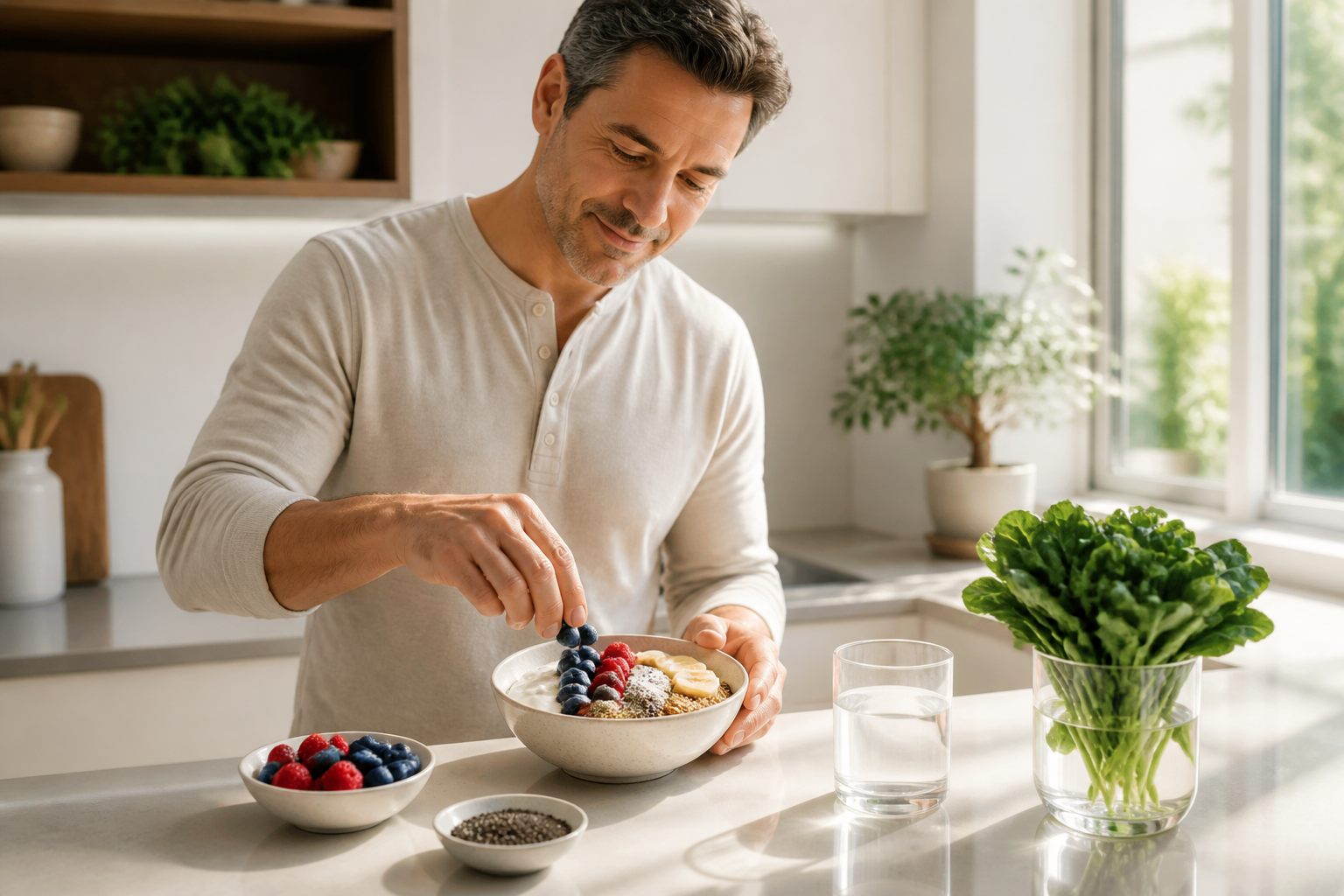
Does PSP Begin in the Gut? Understanding the Link Between Progressive Supranuclear Palsy, Gut Health, Probiotics and L-Arginine
Introduction: Could the Gut Be Part of the PSP Story?
By Rebecca Padgett | Maternity Nurse and Gut Health Practitioner
Progressive Supranuclear Palsy, usually known as PSP, is a rare and complex neurological condition. It can affect balance, walking, eye movements, speech, swallowing, thinking and behaviour.
Because PSP is associated with the abnormal accumulation of a protein called tau in certain areas of the brain, most research has understandably focused on the nervous system.
However, scientists are increasingly interested in the relationship between the gut and the brain. The digestive system contains trillions of microorganisms, collectively known as the gut microbiome, as well as its own extensive nervous system. These systems communicate constantly with the brain through nerves, hormones, immune signals and chemical messengers.
This raises an intriguing question: does PSP begin in the gut?
At present, there is no convincing evidence that PSP actually starts in the gut and then travels to the brain. However, research into the gut-brain axis is developing rapidly, and scientists are investigating whether gut health, the microbiome and metabolic processes could influence neurological health.
This also raises questions about probiotics and nutritional supplements such as L-arginine. Could they offer useful benefits for someone living with PSP?
The answer requires a little caution. There are potential benefits to both, but neither should currently be considered a proven management approaches for PSP.
What Is Progressive Supranuclear Palsy?
Progressive Supranuclear Palsy is a rare neurological condition and belongs to a group of conditions known as tauopathies.
Tau is a protein that normally helps maintain the structure of nerve cells. In PSP, abnormal tau accumulates in particular brain regions and contributes to the gradual loss of normal nerve-cell function.
People with PSP may experience frequent falls, stiffness, slowed movement, difficulty controlling eye movements, speech problems, swallowing difficulties and changes in thinking or behaviour.
PSP can sometimes resemble Parkinson's in its early stages. However, the underlying biology is different. Parkinson's is primarily associated with abnormal alpha-synuclein, whereas PSP is primarily a tau-related disorder.
The exact cause of PSP remains unknown in most cases.
This is one reason researchers are asking whether influences outside the brain, including the gut, might play some part in the wider process.
The Gut-Brain Axis: A Two-Way Conversation
Your gut is much more than a food-processing system.
It contains the enteric nervous system, sometimes described as the body's "second brain", along with a huge population of microorganisms.
The gut microbiome can produce substances that interact with the immune system and metabolism. The gut and brain communicate through several pathways, including the vagus nerve, immune signalling, hormones and other chemical messengers.
And importantly, the conversation works both ways.
The brain can influence digestion, appetite and bowel function. At the same time, signals originating in the gut can influence processes throughout the nervous and immune systems.
This has led researchers to investigate the relationship between PSP and gut health.
However, it is important not to jump from "there is a connection" to "the gut causes PSP". Science rarely makes its biggest discoveries by taking shortcuts.
Could Gut Health Be Connected to Tau?
Tau is at the centre of PSP research.
Scientists have investigated whether abnormal proteins involved in neurological conditions might somehow move between connected parts of the nervous system.
Because the digestive tract contains its own nervous system, researchers have naturally asked whether these proteins could be detected there.
However, research has not established that PSP begins in the intestine.
This is an important distinction. Finding tau or other neurological proteins in intestinal tissue does not automatically demonstrate that the intestine is where a neurological condition begins.
At the moment, the evidence does not support the simple theory that PSP starts in the gut and then travels upwards to the brain.
What Role Could the Gut Microbiome Play?
The microbiome is one of the most exciting areas of modern gut research.
The bacteria living in our digestive system can influence digestion, immune function and metabolism. They can also produce short-chain fatty acids and other metabolites that interact with the body.
Changes in the microbiome have been studied in several neurological conditions, particularly Parkinson's.
However, PSP should not simply be viewed as another form of Parkinson's. Its underlying pathology is different, and research specifically examining the microbiome in PSP remains limited.
Nevertheless, studying the microbiome could eventually help researchers understand whether gut-related immune activity or metabolic changes influence the environment in which neurological conditions develop.
Probiotics: What Are the Potential Benefits?
Probiotics are live microorganisms that may provide health benefits when consumed in adequate amounts. They are found naturally in some fermented foods and are also available as dietary supplements.
One of the most obvious potential benefits of probiotics is supporting aspects of digestive health. Certain probiotic strains have been studied for occasional loose stools and some other digestive concerns.
However, probiotics are not all the same.
Different strains can have completely different effects. A probiotic containing one bacterial strain cannot necessarily be expected to produce the same result as another product containing a different strain.
For this reason, it is more accurate to talk about the benefits of specific probiotic strains rather than claiming that "probiotics" as a whole have one universal effect.
Could Probiotics Benefit Someone With PSP?
This is where the distinction between gut health and PSP becomes important.
There is currently no strong clinical evidence showing that probiotic supplements can support resilience against PSP, stop tau accumulation or slow the progression of Progressive Supranuclear Palsy.
However, probiotics may potentially support digestive health in some people, and maintaining good digestive function can be particularly valuable for someone living with a neurological condition.
Changes in bowel habits, reduced appetite and dietary difficulties can become important issues in people with neurological conditions.
Supporting the gut may therefore contribute to general wellbeing, even though it should not be described as a management approaches for PSP.
If someone with PSP is considering a probiotic, it is sensible to discuss the choice with a doctor, dietitian or pharmacist. The particular strain, dose and reason for taking it all matter.
L-Arginine: What Is It?
L-arginine is an amino acid that occurs naturally in protein-containing foods such as meat, fish, dairy products, nuts, seeds and legumes.
The body can also produce L-arginine.
One of its best-known functions is its involvement in the production of nitric oxide. Nitric oxide helps regulate the relaxation and widening of blood vessels, which is important for circulation.
Because of this, L-arginine supplements are sometimes promoted for heart and circulation health, exercise performance and blood flow.
There is some scientific interest in these effects, but the evidence is mixed, and taking additional L-arginine does not automatically mean better health.
What Are the Potential Benefits of L-Arginine?
L-arginine may have physiological effects related to blood vessel function and nitric oxide production.
Some research has investigated whether supplementation can influence blood pressure or circulation. However, results vary depending on the population studied, the dosage and the health situation being considered.
L-arginine is also sometimes used in sports supplements because of its proposed role in blood flow and exercise performance. Evidence for improving athletic performance is inconsistent.
It is therefore important not to confuse a biological role with a proven therapeutic benefit.
Your body needs L-arginine for normal physiological processes, but that does not necessarily mean taking a high-dose supplement will provide additional benefits.
Could L-Arginine Help With PSP?
At present, there is not enough clinical evidence to recommend L-arginine as a management approaches for PSP.
There are interesting biological reasons for studying L-arginine, particularly its relationship with nitric oxide and blood vessel function. Brain health depends on an adequate blood supply, and blood vessel health is an important area of medical research.
But this does not mean that L-arginine has been shown to slow PSP, reduce abnormal tau or improve the neurological symptoms of PSP.
The subject of L-arginine and PSP should therefore be regarded as an area for further research rather than an established management approaches approach.
L-Arginine and Gut Health
L-arginine also has connections with general metabolism and intestinal biology, although much of the research is still developing.
It is involved in protein metabolism and several important biochemical pathways.
However, taking large amounts of L-arginine can cause unwanted digestive symptoms, including nausea, abdominal discomfort and occasional loose stools in some people.
It can also lower blood pressure and may interact with certain medications.
This makes professional advice particularly important for anyone with PSP who is already taking several medicines or who has other medical concerns.
Natural food sources of L-arginine are generally a sensible part of a varied diet. A supplement should be considered separately and used thoughtfully.
Can Probiotics and L-Arginine Be Taken Together?
There is no established evidence showing that combining a probiotic with L-arginine specifically benefits people with PSP.
The two substances work in very different ways. Probiotics are intended to introduce or support particular microorganisms in the digestive tract, while L-arginine is an amino acid involved in several metabolic processes, including nitric oxide production.
There is no scientific basis at present for claiming that the combination can support PSP.
That does not mean the combination is necessarily inappropriate for everyone. It simply means that the decision should be based on individual health needs rather than the expectation of supporting the underlying neurological condition.
When supplements are being considered, it is particularly important to check for possible interactions with existing medications.
Supporting Gut Health Naturally
Before reaching for a cupboard full of supplements, there are some remarkably simple ways to support gut health.
Eating a varied diet rich in vegetables, fruits, beans, lentils, whole grains, nuts and seeds provides different types of fibre and nutrients for the gut microbiome.
Fermented foods such as live-culture yoghurt may also be useful for some people.
Adequate hydration, regular physical activity and good sleep are equally important parts of overall health.
For someone with PSP, however, eating can become more difficult as swallowing problems develop. In this situation, maintaining adequate nutrition and hydration becomes especially important.
A speech and language therapist, dietitian or other healthcare professional can provide personalised advice about safe food textures, fluids and nutritional requirements.
Don't Believe Every remarkable Claim
The internet has no shortage of products promising to "support the gut", "remove toxins" or even reverse neurological health concerns.
Unfortunately, the human body did not read the marketing brochure.
Probiotics can be useful in certain circumstances, but their effects depend on the particular strain and the health concern being addressed.
L-arginine has important biological functions, but that does not mean high-dose supplementation is suitable for everyone.
People with serious health concerns or weakened immune systems should take particular care when considering probiotic supplements. Likewise, anyone taking medication should discuss L-arginine supplementation with a healthcare professional before starting it.
So, Does PSP Begin in the Gut?
At present, the answer is that there is no convincing evidence to say that it does.
We know that the gut and brain communicate closely. We know that the microbiome can influence immune and metabolic processes. We also know that PSP involves abnormal accumulation of tau in particular areas of the nervous system.
What remains uncertain is whether changes in the gut play any meaningful role in triggering or accelerating PSP.
Therefore, the question "does PSP begin in the gut?" remains an interesting scientific question rather than an established medical fact.
The Bottom Line
The relationship between PSP and gut health is an exciting area of research.
Probiotics may provide digestive benefits for some people, particularly when a suitable strain is chosen for a specific digestive issue. However, there is currently no strong evidence that probiotics support resilience against, support or slow PSP.
L-arginine is an important amino acid involved in nitric oxide production and other biological processes. It may have effects on circulation and blood vessel function, but there is currently insufficient clinical evidence to say that L-arginine supports management of or slows PSP.
For someone living with PSP, the priority should remain appropriate neurological care, good nutrition, safe swallowing, hydration, physical activity where appropriate and regular medical supervision.
Looking after the gut can certainly be part of looking after the whole person. But at present, it would be a step too far to say that supporting the gut can support PSP.
The gut may have an interesting role in the story of neurological health, but when it comes to PSP, the final chapter has definitely not been written yet.
Your Longevity Journey Begins Here !


Scan to visit Rebecca Padgett's page
or go to maxilinreview.com/rebecca
Share this article
Related articles
Maxilin et la L-Arginine : les « Maman et Papa » d’EnergyMax Group
Maxilin et la L-Arginine : les « Maman et Papa » d’EnergyMax Group Soutenir les fondations de l’énergie, de la vitalité et d’un vieillissement en bonne santé Pa...
by Rebecca PadgettLe produit dont tout le monde parle : qu’est-ce qui fait le succès d’un produit phare dans la vente directe ?
Le produit dont tout le monde parle : qu’est-ce qui fait le succès d’un produit phare dans la vente directe ? Par Rebecca Padgett | Infirmière spécialisée en ma...
by Rebecca PadgettThe Product People Can’t Stop Talking About: What Makes a Flagship Product Win in Direct Sales?
The Product People Can’t Stop Talking About: What Makes a Flagship Product Win in Direct Sales? By Rebecca Padgett | Maternity Nurse and Gut Health Practitioner...
by Rebecca Padgett