Why Gut Health Matters More Than Ever
Why Gut Health Matters More Than Ever
From conversations about wellbeing to supermarket shelves filled with fibre-rich foods and fermented favourites, gut health has become one of the biggest lifestyle topics of recent years. While trends may come and go, caring for your digestive system is about much more than following the latest craze. It's about supporting your body through simple, sustainable habits that contribute to overall wellbeing.
Your digestive system works around the clock, helping to break down food, absorb nutrients and help reduce waste. It's also home to trillions of microorganisms—often referred to as the gut microbiome—which play an important role in maintaining normal digestive function and supporting a healthy, balanced lifestyle.
The good news? Looking after your gut doesn't have to be complicated.
Everyday Habits That Support a Healthy Gut
A healthy gut is usually the result of consistent daily choices rather than quick fixes. Experts generally recommend focusing on a combination of healthy lifestyle habits, including:
Eating a varied, balanced diet rich in fruit and vegetables
Including fibre-rich foods such as oats, beans, whole grains and pulses
Staying well hydrated throughout the day
Getting regular physical activity
Managing stress where possible
Prioritising good quality sleep
These everyday habits can help create an environment that supports normal digestive wellbeing and contributes to overall health.
The Importance of Fibre
One nutrient that deserves particular attention is fibre. Despite widespread awareness of its benefits, many adults in the UK consume less fibre than recommended.
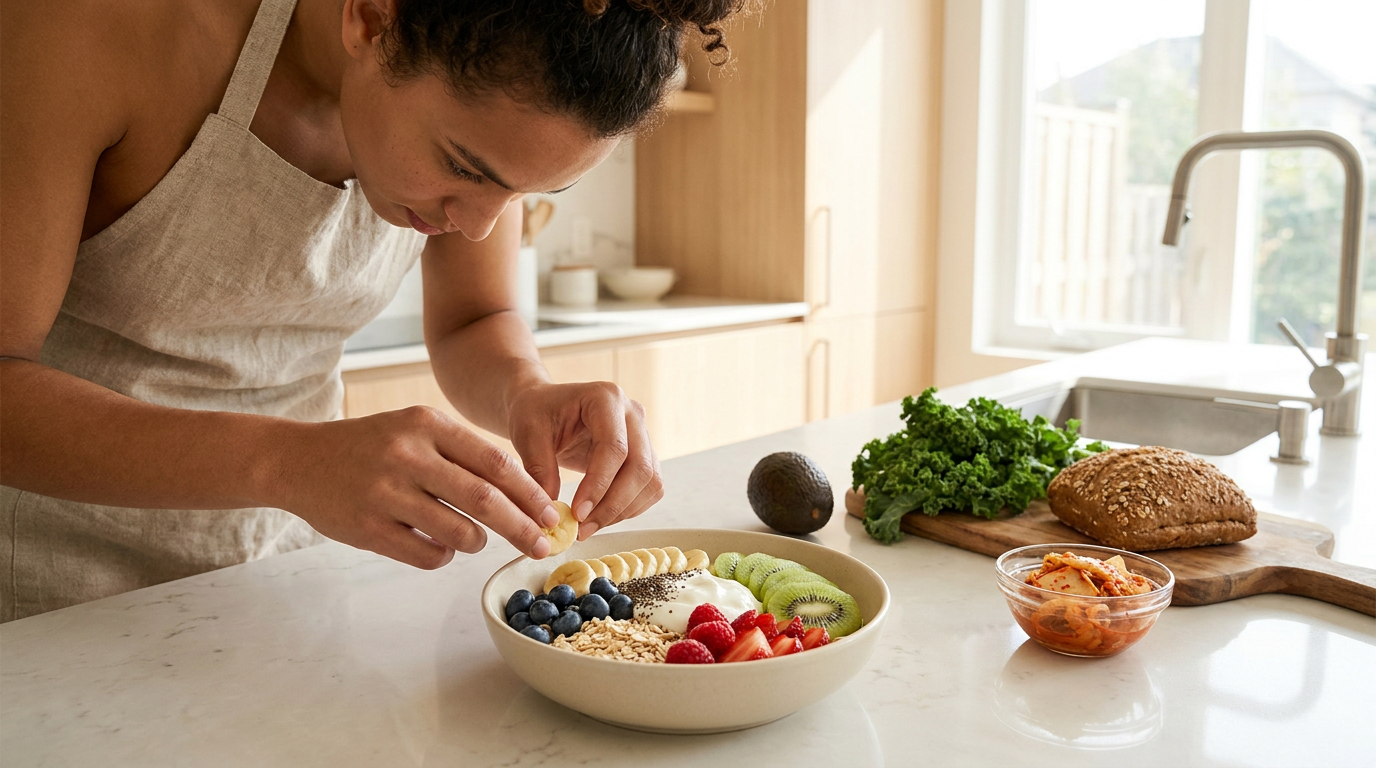
Fibre acts as nourishment for many of the beneficial bacteria naturally present in the gut. Foods such as onions, garlic, asparagus, bananas, apples, berries, oats and legumes can all contribute towards a varied diet that supports digestive wellbeing.
Increasing fibre intake gradually, while drinking enough water, can help make dietary changes more comfortable for many people.
Where Do Probiotics Fit In?
Alongside a healthy diet, probiotics have attracted increasing interest among people looking to support their digestive wellbeing.
Probiotics are live microorganisms which, when consumed in adequate amounts, may help maintain the balance of the gut microbiome. Different probiotic products contain different strains and formulations, so it's important to remember that not all probiotics are the same.
Fermented foods such as live yoghurt, kefir, sauerkraut and kimchi naturally contain beneficial bacteria, while probiotic supplements can provide another option for those wishing to include probiotics as part of their daily routine.
A probiotic supplement should be viewed as a complement to—not a replacement for—a balanced diet and healthy lifestyle.
Could a Daily Probiotic Become Part of Your Routine?
Many people choose to include a daily probiotic as part of their overall wellbeing routine, particularly alongside healthy eating and regular exercise.
One option available is Maxilin Super Probiotic, a probiotic supplement designed for everyday use. It can be incorporated into a balanced lifestyle as part of a wider approach to digestive wellbeing.
Rather than looking for dramatic overnight changes, many people find that consistency is the key when building healthy habits. Taking a probiotic regularly, eating a varied diet rich in fibre and maintaining an active lifestyle are all examples of small daily choices that can contribute to long-term wellbeing.
As with any food supplement, probiotics should be used according to the manufacturer's instructions and are not intended to replace a healthy, balanced diet.
Looking Beyond Digestion
Although gut health is often discussed in relation to digestion, researchers continue to explore the many ways the gut microbiome interacts with the body. This remains an active area of scientific research, with growing interest in understanding the complex relationship between the gut microbiome, nutrition and overall health.
While research continues to evolve, one message remains consistent: supporting digestive wellbeing through healthy lifestyle habits benefits your health in many ways.
Rather than searching for remarkable solutions, most healthcare professionals encourage a long-term approach built around nutritious food, movement, sleep and stress management.
Building Healthy Habits That Last
Improving your gut health doesn't require perfection. Small, sustainable changes often prove easier to maintain than restrictive diets or complicated routines.
You might begin by adding an extra portion of vegetables to your meals, swapping refined grains for wholegrain alternatives, drinking more water or introducing a daily probiotic into your routine.
These gradual adjustments can become lasting habits that support digestive wellbeing over time.
The Bottom Line
Your gut plays an important role in your everyday wellbeing, and looking after it is one of the simplest investments you can make in your long-term health.
Eating a balanced diet rich in fibre, staying active, sleeping well and managing stress all help support normal digestive function. For those looking to complement these healthy habits, a probiotic supplement such as Maxilin Super Probiotic may also form part of an overall wellbeing routine.
There is no single solution for good gut health, but by making small, positive choices every day, you can build habits that support your digestive wellbeing for years to come.
For more information Get In Touch
Disclaimer: This article is intended for general information only and should not be considered medical advice. Food supplements, including probiotics, should not be used as a substitute for a varied, balanced diet and a healthy lifestyle. Individual responses to probiotic supplements may vary. If you have a medical condition, are pregnant or breastfeeding, are taking medication, or have concerns about your digestive health, seek advice from a qualified healthcare professional before making changes to your diet or supplement routine.
Share this article
Related articles
Ons Verhaal
Ons Verhaal Ontdek de wetenschap en het erfgoed achter MaXilin Probiotic. Een Erfenis van Wetenschappelijke Excellentie MaXilin Probiotic is het resultaat van t...
by Simone MacGriannaEstrobolomet: Hvorfor din tarm måske er nøglen til at løse dit hormonelle kaos
Estrobolomet: Hvorfor din tarm måske er nøglen til at løse dit hormonelle kaos Det er et scenarie, der udspiller sig dagligt i wellnessbutikker og på sociale me...
by Simone MacGriannaUrinezuur en darmgezondheid: inzicht in het verband
Urinezuur en darmgezondheid: inzicht in het verband Urinezuur wordt vaak in verband gebracht met jicht, pijnlijke gewrichten en bepaalde voedingsgewoonten. Toch...
by Simone MacGrianna