Probiotics: The Complete Guide to Probiotics, Gut Health, Prebiotics and Choosing the Right Supplement
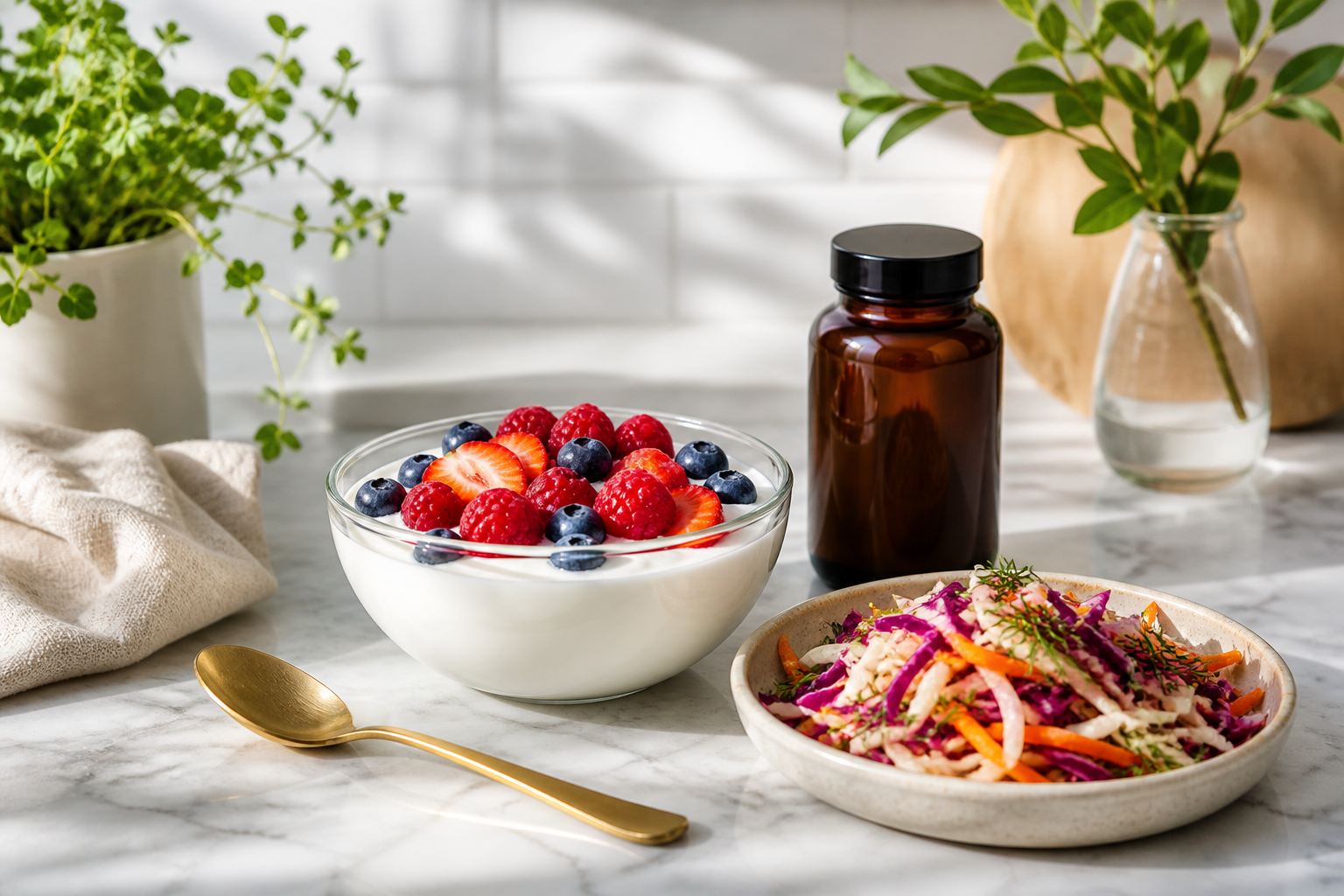
Probiotics: The Complete Guide to Probiotics, Gut Health, Prebiotics and Choosing the Right Supplement
Probiotics have become one of the most talked-about areas of nutrition and gut health. Walk into a supermarket or search online and you will find probiotic yoghurts, fermented foods, capsules, powders and sachets promising different approaches to digestive wellbeing.
But what exactly are probiotics? What is the difference between a probiotic and a prebiotic? Does a higher number of bacteria automatically mean a better product? And how should you choose a probiotic supplement?
This guide explores the science behind probiotics and explains what to look for when considering a probiotic as part of a balanced lifestyle.
What are probiotics?
In scientific terms, probiotics are live microorganisms which, when administered in adequate amounts, provide a health benefit to the host. Importantly, not every product containing live bacteria automatically qualifies as a probiotic.
The microorganisms need to be appropriately identified, present in an adequate amount and supported by evidence relevant to the benefit being claimed.
This is why the name and strain of the microorganism can matter.
Different probiotic strains can behave differently, meaning that choosing a probiotic should not simply be about looking for the largest number printed on the packet.
What is the gut microbiome?
The digestive system contains a vast and diverse community of microorganisms collectively known as the gut microbiome.
Our understanding of this community has developed rapidly. Researchers are continuing to investigate the relationship between the microbiome, nutrition, digestion, metabolism, immune function and many other aspects of human health.
The microbiome is influenced by numerous factors, including diet, lifestyle and the environment.
A varied diet containing vegetables, fruits, whole grains, legumes and other fibre-containing foods is an important foundation for healthy nutrition.
Probiotics are not a replacement for a balanced diet. Instead, some people choose to include probiotic foods or supplements as one part of a broader approach to wellbeing.
Probiotics and prebiotics: what is the difference?
Although the words sound similar, probiotics and prebiotics are not the same thing.
Probiotics are live microorganisms.
Prebiotics are substances that are selectively used by microorganisms and can provide a health benefit. Many recognised prebiotics are forms of dietary fibre.
Examples include inulin and certain oligosaccharides.
This distinction is important because a product can contain probiotics, prebiotics, or both.
Some formulations deliberately combine the two approaches.
Why do probiotic strains matter?
One of the biggest misunderstandings about probiotics is that all bacteria work in exactly the same way.
They don't.
Probiotic microorganisms are identified by genus, species and, where applicable, strain. Research on one strain should not automatically be used to make claims about another strain.
For consumers, this means that a quality probiotic product should provide clear information about what microorganisms it contains rather than simply using a broad statement such as "good bacteria".
The amount supplied also matters.
What does CFU mean?
CFU stands for colony-forming units. It is commonly used to describe the number of viable microorganisms in a probiotic product.
You may see products containing millions, billions or even tens of billions of CFU.
However, a bigger number does not automatically mean a product is better.
The appropriate amount depends on the microorganisms, formulation, intended use and evidence behind the product. Looking only at the headline CFU number can therefore be misleading.
A better approach is to consider the complete formulation.
What should you look for in a probiotic supplement?
When comparing probiotic supplements, consider several factors rather than relying on one headline feature.
Look for clear information about:
The microorganisms included
The amount supplied
The ingredients used alongside the microorganisms
Storage instructions
Recommended serving
Age suitability
Manufacturer information
Directions for use
Product quality and traceability
It is also worth considering whether the product fits conveniently into everyday life.
A probiotic that is difficult to take consistently may be less practical than one that fits naturally into a person's routine.
Maxilin Super Probiotic
Maxilin Super Probiotic takes a combination approach, bringing together probiotic microorganisms and prebiotic fibres in one sachet.
The formulation contains three probiotic strains:
Lactobacillus acidophilus
Streptococcus thermophilus
Lactobacillus helveticus
It also contains inulin and resistant dextrin, two fibre ingredients included within the formulation, together with Vitamin C, Vitamin E, B vitamins, calcium and magnesium.
Each sachet provides 20 billion CFU according to the product information supplied by the manufacturer.
Maxilin is designed as a convenient sachet-based supplement and is suitable from 7 months of age according to the manufacturer's stated product guidance. Parents and carers should always follow the age-specific directions and preparation instructions supplied with the product.
For adults and older children, the product can similarly be incorporated into an overall healthy lifestyle according to the manufacturer's instructions.
Probiotics for babies and children
Parents naturally want to make informed decisions about anything they give their children.
The nutritional needs of babies and young children are different from those of adults, so age suitability and directions for use are particularly important.
If considering any food supplement for a baby or child, parents should read the product label carefully and follow the manufacturer's instructions.
Maxilin's stated suitability begins at 7 months of age. It should be used only according to the instructions appropriate for the child's age.
For babies or children with an underlying health concern, or where there are concerns about nutrition or digestive symptoms, parents should seek appropriate advice from a qualified healthcare professional.
Food sources of probiotics
Probiotic microorganisms can occur in certain foods, particularly some fermented foods.
However, the presence of live microorganisms does not necessarily mean a food meets the scientific definition of a probiotic. The identity, amount and evidence behind the microorganism all matter.
This is one reason probiotic supplements can be attractive to people who want clearly defined quantities and ingredients.
Nevertheless, probiotic supplements should complement rather than replace a varied diet.
Can you get prebiotics from food?
Yes.
A wide range of plant foods contributes dietary fibre, and some foods naturally contain recognised prebiotic fibres.
Examples include onions, garlic, chicory root, some whole grains and other plant foods.
Increasing the variety of plant foods in the diet can therefore be a useful part of a healthy eating pattern.
For people who want additional prebiotic ingredients in a supplement, formulations containing ingredients such as inulin or resistant dextrin provide another option.
How do you choose the right probiotic?
There is no single probiotic that is automatically "the best" for everybody.
The right choice depends on the individual, the product's formulation, the intended purpose, age suitability and the evidence available for the particular microorganisms and formulation.
Rather than choosing solely on the basis of marketing language, look at the label.
Ask:
What microorganisms are included?
How much does each serving provide?
What other ingredients are included?
Is the product suitable for my age group?
Are the storage and usage instructions clear?
Does the product fit easily into my routine?
These questions can help consumers make a more informed decision.
A daily approach to digestive wellbeing
Gut wellbeing is not about one food, one supplement or one lifestyle change.
A balanced diet, adequate fluid intake, regular physical activity, sufficient sleep and healthy lifestyle habits all contribute to overall wellbeing.
Probiotics can be considered as one component of this bigger picture.
For people looking for a convenient combination of probiotic microorganisms and prebiotic fibres, Maxilin Super Probiotic provides a multi-ingredient sachet formulation containing three probiotic strains, inulin and resistant dextrin, alongside selected vitamins and minerals.
Used according to the manufacturer's instructions, it can form part of a balanced lifestyle.
Frequently asked questions about probiotics
Are all probiotics the same?
No. Different microorganisms and strains can have different characteristics and evidence bases. The exact strain, amount and formulation are important considerations.
Is a probiotic the same as a prebiotic?
No. Probiotics are live microorganisms. Prebiotics are substances selectively utilised by microorganisms and may provide a health benefit.
Does a higher CFU mean a better probiotic?
Not necessarily. CFU is only one consideration. The microorganisms, strain, formulation, dose and evidence should also be considered.
Can children take probiotics?
Some probiotic products are specifically formulated or labelled for children. Always check the individual product's age suitability and directions. Maxilin Super Probiotic is stated by the manufacturer to be suitable from 7 months of age.
Can I take a probiotic every day?
Some probiotic products are designed for daily use. Always follow the specific manufacturer's directions rather than assuming that all probiotic products should be taken in the same way.
Are probiotics medicines?
Food supplements containing probiotics are not medicines simply because they contain live microorganisms. They should not be presented as management approaches or as supporting recovery from serious health conditions.
The bottom line
Probiotics are a fascinating area of nutrition and microbiome science, but choosing a probiotic should involve more than looking for the biggest number on the label.
Understanding the difference between probiotics and prebiotics, checking the microorganisms and amounts provided, considering age suitability and choosing a formulation that fits your lifestyle can all help you make a more informed decision.
Maxilin Super Probiotic brings together three probiotic strains, prebiotic fibres including inulin and resistant dextrin, and selected vitamins and minerals in a convenient sachet. With manufacturer-stated suitability from 7 months of age, it offers one option for families and adults looking to include a probiotic supplement within a balanced lifestyle.
As research into the microbiome continues, our understanding of probiotics will continue to develop. The most sensible approach is to keep the bigger picture in mind: a varied diet, healthy lifestyle and informed choices about supplementation.
For more information Get In Touch
Share this article
Related articles
Ons Verhaal
Ons Verhaal Ontdek de wetenschap en het erfgoed achter MaXilin Probiotic. Een Erfenis van Wetenschappelijke Excellentie MaXilin Probiotic is het resultaat van t...
by Simone MacGriannaHikâyemiz
Hikâyemiz MaXilin Probiotic'in bilimsel geçmişini ve ürün geliştirme yaklaşımını keşfedin. Bilimsel Araştırmalardan İlham Alan Bir Yaklaşım MaXilin Probiotic, p...
by Simone MacGriannaMaxiin Super Probiotic
How It Works Discover the science behind MaXilin Probiotic Your Journey to Better Gut Health What to expect when taking MaXilin Week 1 Initial Adjustment Your b...
by Simone MacGrianna